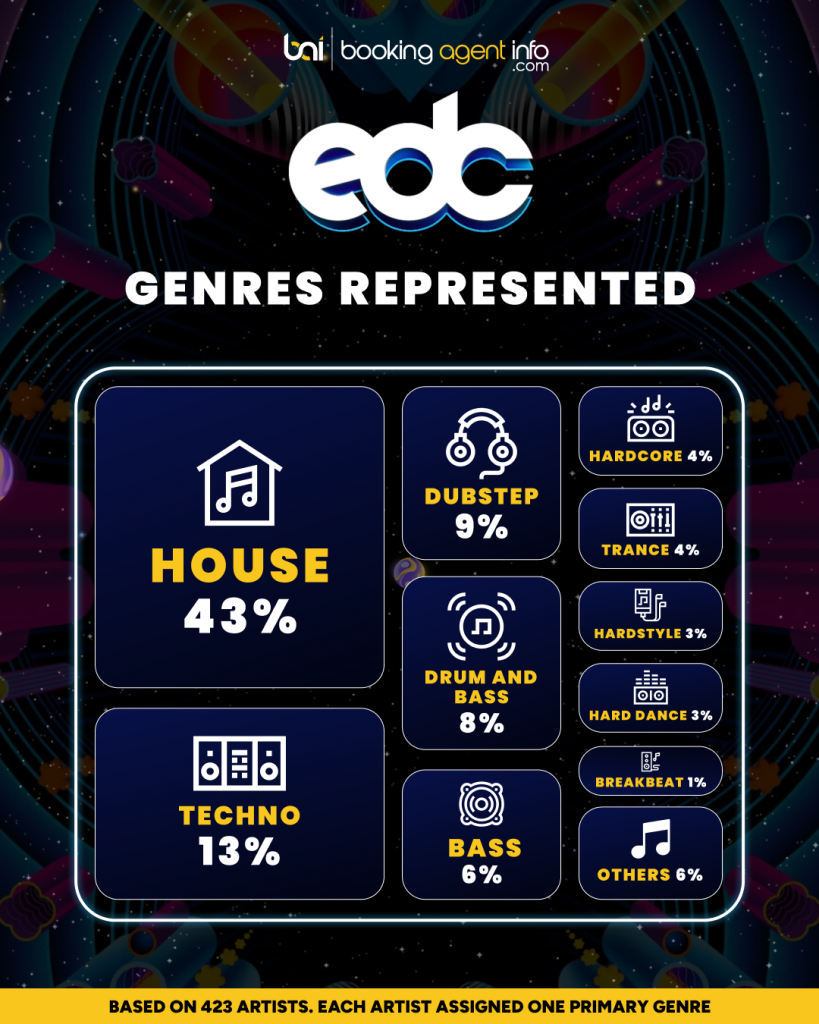
EDC’s genre breakdown shows how broad the modern electronic festival landscape has become.
House led the lineup at 43%, making it the clear foundation of the festival. But EDC was far from house-only.
Techno represented 13%, while Dubstep, Drum & Bass, and Bass combined for 23% of the lineup. 4-
Harder sounds also had a noticeable presence, with Hardcore, Hardstyle, and Hard Dance combining for 10%.
That range shows up in the lineup itself, from John Summit, Fisher, and Chris Stussy on the house side, to Charlotte de Witte and I Hate Models in techno, to Liquid Stranger, Sub Focus, and AHEE across the bass side.
Miami Music Week looked much more concentrated. House made up 66% of the artists performing throughout the week, while Techno and Bass each represented 14%.
Everything else was much smaller, with Trance at 2%, Hard Dance at 1%, and Breaks at 1%.
The biggest takeaway is that House leads both, but in very different ways.
At Miami Music Week, House dominates, reflecting a more House ecosystem.
At EDC, House still leads, but the genre mix is much more spread out, with more room for bass music, hard dance, techno, trance, and other electronic subgenres.
Techno was also one of the most consistent genres across both, representing 14% at MMW and 13% at EDC.
The trend: House remains the center of gravity in U.S. electronic music, but event format matters. Miami Music Week shows the strength of the club and House market, while EDC reflects a broader festival landscape.